When I first started thinking about maritime domain awareness (MDA), I was working with an allied Coast Guard in Southeast Asia on getting data from far-flung islands back to the mainland. This Coast Guard, like many around the world, was looking to throw the whole house at the problem. Satellite imagery, radio frequency (RF) collections from space, shore-based stations, radar signatures from manned boats, sensor data from unmanned assets, and traditional AIS monitoring — in other words, myriad ways to go about solving the problem of knowing what is going on in your exclusive economic zone (EEZ).
The problem of having your cake and eating it too, for most governments around the world, is that it is expensive. Moreover, each of these approaches to MDA in some way necessitates the usage of other approaches because there are inherent gaps in choosing one, two, or even three modes of sensing.
And beyond the practical constraints of attempting to secure your waters with just satellite imagery or just coastal monitoring stations, there is a very real sovereignty constraint. This is not meant to introduce yet another buzzword into the conversation. Put simply, if you do not control a source of data, there are situations where you will find yourself paying an unacceptable premium for or outright unable to access data from a MDA solution owned and operated by a different country. A hypothetical scenario: satellite imagery and space-based RF collections are urgently needed in Southeast Asia, but entire constellations have been re-tasked for ongoing operations in the Middle East — how does a country fill in the gaps when they are no longer the priority?
Cost, capability, and sovereignty. Nations continue to grapple with these three constraints when right-sizing their approach to MDA.
Trends in Maritime Technology Funding
Trends in Maritime Technology Funding
It was once so difficult to put sophisticated sensors in the ocean at scale and get that data back to some central location for processing and analysis that it made more sense to launch entire satellite constellations for MDA than put sensors in the ocean. However, a few technology trends in the last 5-10 years have unlocked the ocean economy.
Abundant satellite backhaul at sea via Starlink. Before, people relied on expensive, low-bandwidth, and in the case of geostationary satellites, higher latency communications.
Cheap computers with impressive edge computing capabilities. Companies can now run signal processing and computer vision models, only reporting back detection or classifications.
Increasing use of the undersea domain. Unmanned underwater vehicles (UUVs) are increasingly fielded by allied and adversary nations, posing a risk to critical offshore and ocean-adjacent infrastructure like subsea cables and ports.
Figure 1 highlights the funding reality: the vast majority of private capital in the United States has been injected into a handful of unmanned surface vessel (USV) companies. In fact, the huge spike in USV funding in 2026 is almost entirely due to Saronic. The UUV market is still growing into a more mature phase, and satellite constellations for MDA continue to see some investments — the most notable player here in recent years being Hawkeye 360.
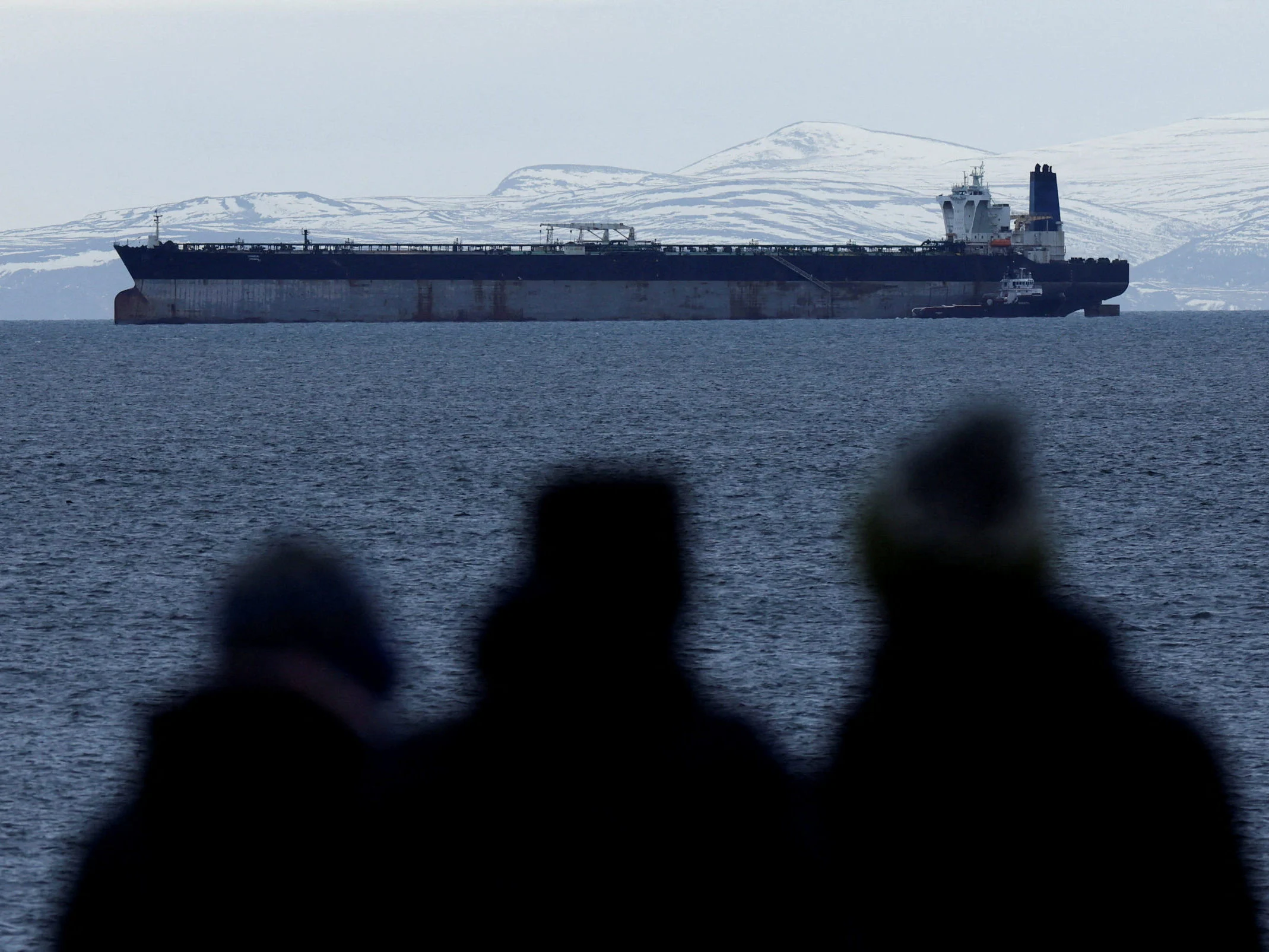
Countries around the world need better ways to secure their EEZs. Illegal fishing robs economies of revenue and people of food. Drug trafficking fosters transnational organized crime. Shadow fleets flying under various flags loiter around critical infrastructure. MDA is still an unsolved problem.
But does the incredible amount of funding flowing into the maritime sector directly translate into enhanced MDA? My argument is that most maritime funding to date is flowing to larger and more capable vessels which are meant to replace the mission of manned vessels. Manned vessels enforce law, interdict, deliver effects, facilitate logistics, and can host a variety of high-power payloads. Nowhere in my description of manned vessels did I identify their mission to be MDA. That is because it is a waste of time and money for manned vessels to be a cornerstone of the MDA mission. Logically, USVs like the Saronic Corsair (which according to estimates can approach $1M per unit), are also wasted on the MDA mission.
Manned vessels and exquisite — yes, exquisite if they cost more than $200,000 per unit just for the hull, some cameras, and remote control — USVs are great at their jobs. USVs are even more appealing because they can operate in contested environments for extended periods of time without endangering sailors. However, these assets have limited range and need to be refueled or re-kitted. Just like manned boats, they are a highly capable but scarce resource. In an ideal world USVs and manned boats are given specific tasks involving already-identified and constantly tracked targets. That is the MDA mission: feeding intelligence to scarce and capable naval resources that can act upon that intelligence.
In The Origins of Victory, Andrew Krepinevich emphasizes the importance of the scouting function in modern conflicts. Knowing where adversary assets are and what they are doing — at all times — is vital information. However, because modern war is so deadly, these scouting assets need to be deployed at scale and cheaply, such that it is not a huge blow to the joint force when one is lost. Whether or not these exquisite USVs are truly “attritable” depends on the buying power of a nation.
Perhaps the United States can afford $1M per-unit one-way attack boats, but a nation like Taiwan simply cannot. So throwing more boats with high six-figure sticker prices at the MDA problem is unlikely to accomplish much, or even happen in the first place due to budgetary constraints in the nations with the most acute MDA needs.
The answer to MDA is not found in the blossoming USV industry as it stands today. Boats are still too expensive, and the cost per square kilometer of ocean coverage is still too burdensome for most nations. So what are nations using now to secure their EEZ, and where are these solutions failing in the cost, complexity, and sovereignty domains?
Manned boats do not need much explanation. They are expensive, scarce, and their main job is to enforce laws at sea and establish maritime deterrence. In an ideal world, sensor feeds onboard these ships (such as cameras, radar, RF packages, etc.) would be fused together into a single common operating picture at a maritime operations center. Unfortunately, this is not the standard operating procedure of many coast guards and navies around the world. There is tons of useful data stuck on manned vessels.
In a world where manned vessels cannot accomplish the entire MDA mission, satellite constellations are a step in the right direction if economics, latency, and sovereignty align. Many constellations have been moderately or hugely successful in earning generous returns on their initial constellation capital outlays. Hawkeye 360, Planet Labs, Unseenlabs, Spire, and others have contributed enormously to global MDA databases.
Yet there is still some lag time in getting data off of these satellites and into the hands of end users. Geolocation data on RF emitters at sea can take hours to reach operations centers, by which point the vessel in question could have transited a great distance. Satellite imagery can work the same way, but latency is improving steadily. Still, these forms of intelligence are useful for establishing a baseline picture of activity in an EEZ. When real-time information is needed for tracking, targeting, and interdiction, satellite constellations can fall short. The shortcomings of high latency are compounded by sovereignty: when a country that the satellite operator deems more important needs the data more than you do, something has to go up — either the price you pay for the data, or the time it takes for the data to arrive.
Other approaches include a mix of USVs (still exquisite), UUVs (not scalable for this problem due to inherent endurance and communications issues), and shore-based monitoring stations. Shore-based monitoring stations with sophisticated RF and optical payloads can be costly to deploy. As a reference point, Anduril’s land-based sentry towers which earned them their first tranche of revenue can be priced as high as $1M per unit. Shore-based solutions also completely miss the undersea domain and are range-limited by nature.
An alternate approach is needed that combines the lessons of satellite constellations in the power of a distributed network, the capabilities of exquisite USVs or manned boats in sensor sophistication and edge processing, and the highly scalable nature of a shore-based station. Tailwinds exist for a solution like this. Deploying advanced signal processing technology in the ocean for cheap has never been easier. There are simply no platforms in existence that deliver reliable intelligence across the optical, RF, and acoustic domains at a price per node that a nation is willing to pay to blanket their entire EEZ.
The stakes are high. MDA is vital for clawing back lost revenue, restoring ecosystems, combating piracy or transnational crime at sea, and ensuring critical infrastructure remains protected.
Economic impact of maritime domain awareness
Economic impact of maritime domain awareness